Innovators from both academic and commercial sectors shared their experience and reflected on how to contribute to intelligent and sustainable manufacturing using AI, as well as how to bring modern energy solutions, including hydrogen systems, into real-world application.
“The event was excellent - we had a truly impressive turnout, and the presentations were very well attended. There was strong interest in the exhibition stands too, and I am delighted that participants were actively engaging with one another. The event is built on a very strong concept that genuinely connects academia, research organisations and companies. They present their results and explore opportunities for collaboration,” said Jan Platoš, Vice‑Rector for Science, Research and Doctoral Studies and Director of FIP‑AI@VSB‑TUO at VSB-TUO.
The meeting was also positively received by Vladislav Kolarik from Fraunhofer ICT, representing the Fraunhofer Innovation Platform at VSB‑TUO. “The discussions were highly insightful and, I believe, offered plenty of food for thought. I am pleased with the number of participants and with the interest shown by companies wanting to present themselves. We will see what specific collaborations emerge from the event,” he noted.
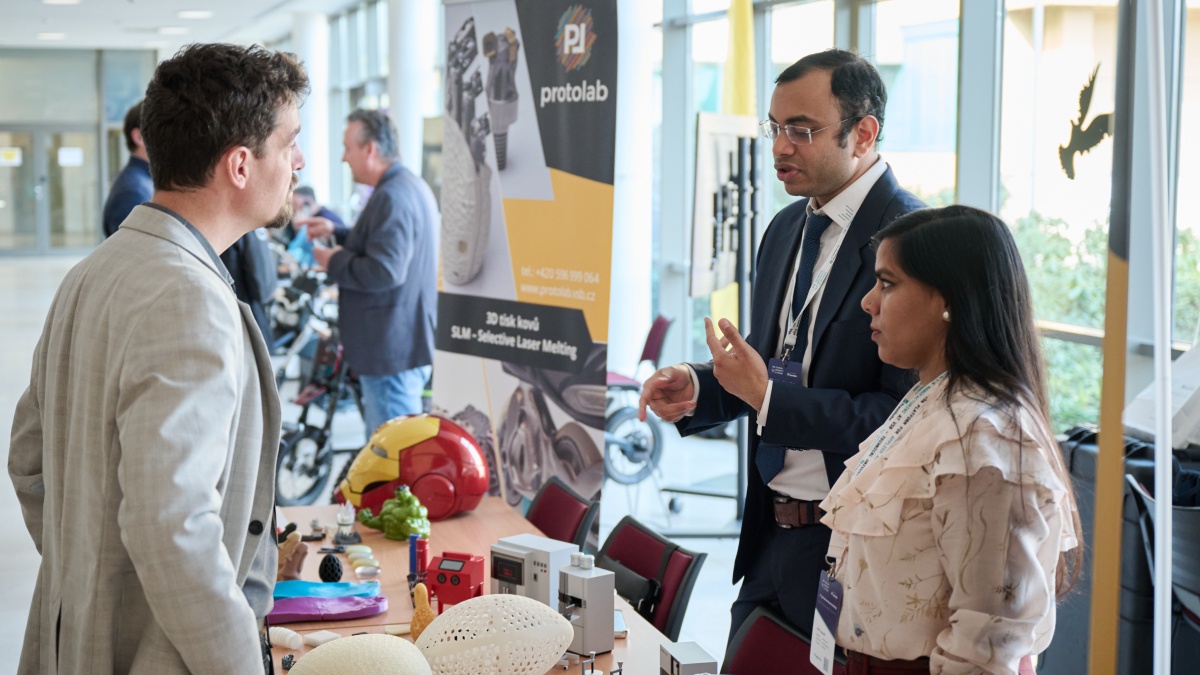
The meeting was organised in cooperation with partners including the Moravian‑Silesian Automotive Cluster (Autoklastr), the Hydrogen Cluster of the Moravian-Silesian Region, and the Chemnitz Chamber of Industry and Commerce (IHK Chemnitz). Representatives of companies associated with Autoklastr took part in the section focused on the use of artificial intelligence, where they presented real applications. “Some people still associate AI only with ChatGPT; I see AI as an integral part of practical applications for managing manufacturing processes or, for example, for data analysis,” said Libor Dobeš, Executive Director of Autoklastr. He particularly valued the event’s ability to bring together a wide range of partners. “This is not a marketing or sales event - it’s a genuinely business‑oriented one. Partners from different environments met here to share approaches that already have real impact in practice, or that could be applied thanks to joint efforts,” he added.
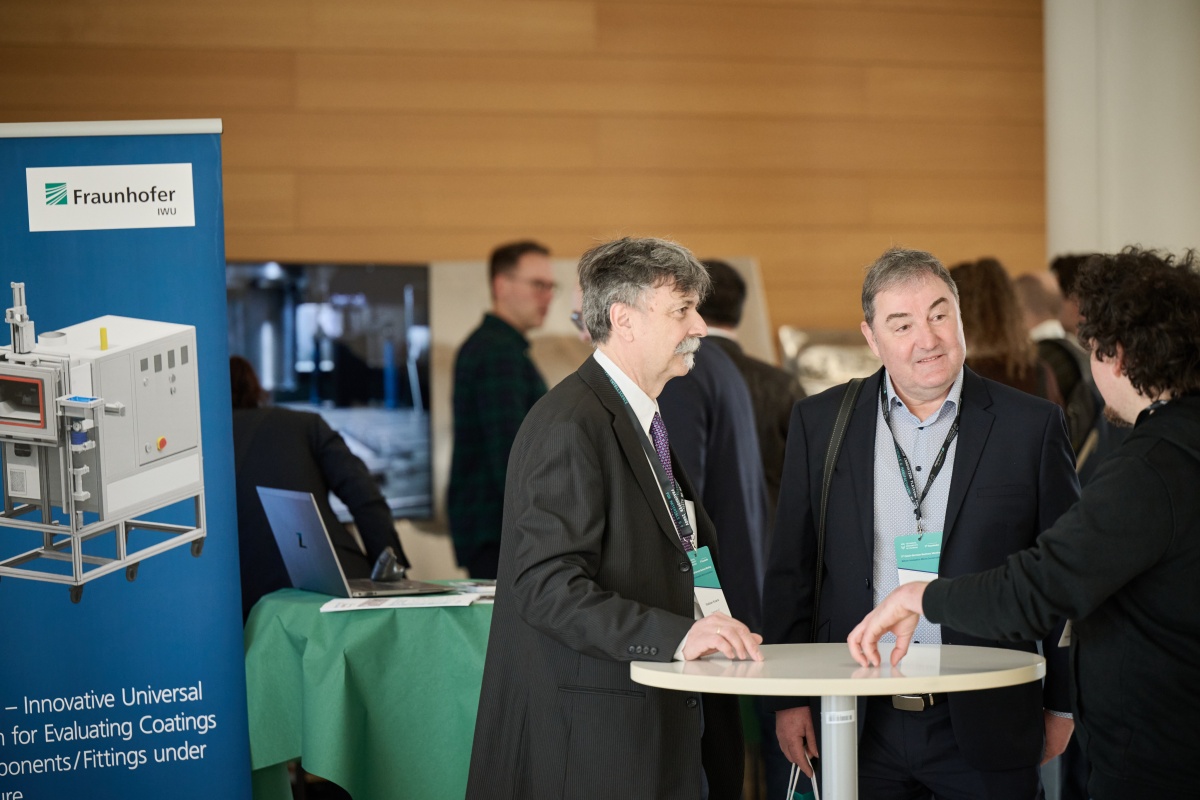
The search for new partners was also a key motivation for another event partner, the Hydrogen Cluster of the Moravian-Silesian Region. “We are currently preparing a European Horizon project with Fraunhofer IWU. But we are also looking for further research partners, and we are very pleased that VSB‑TUO is open to hydrogen technologies. After all, it is home to the Centre for Energy and Environmental Technologies, with which we cooperate. Hydrogen technologies are still in their infancy in the Czech Republic, for example compared to Poland. Research is therefore crucial for the development of new technologies. We know hydrogen is not a silver bullet, but it should certainly have a role in the energy market,” said Marcel Mahdal, responsible for international projects at the Hydrogen Cluster of the Moravian-Silesian Region.
Participants from the Czech Republic, Germany and several other countries attended more than 20 presentations. The programme was divided into four thematic sections focused on Industry 4.0 and AI, sustainable and efficient manufacturing including new materials and energy‑efficient technologies, small‑batch and customised production, and innovations in energy systems including hydrogen technologies. Successful innovations were showcased, among them digital twins, the Edmund system, which uses artificial intelligence to analyse operational data, predict potential equipment failures, and propose optimal steps for prevention and efficient maintenance, as well as a hydrogen‑powered utility vehicle. Networking was a key component of the meeting.
Text: Martina Šaradínová, PR Manager of the REFRESH Project
Photo credit: Petr Havlíček