The reconstruction of Building N on the campus of VSB – Technical University of Ostrava will create a modern research facility for materials research, nanotechnology and future energy applications. The CEETe II project builds on the development of the university’s Centre for Energy and Environmental Technologies (CEET) and will significantly strengthen research infrastructure at both the university and regional levels.
Building N, which was completed in 1992, will undergo comprehensive modernisation. The building will be stripped back to its load-bearing reinforced-concrete frame and subsequently equipped with new technological distribution systems, electrical installations, low-voltage systems and modern heating, ventilation and air conditioning technology. The seven-storey building, with a technical eighth floor, will feature a new internal layout tailored to the current needs of the university’s individual departments. The reconstruction will also include new floor, wall and ceiling finishes as well as a completely new building envelope.
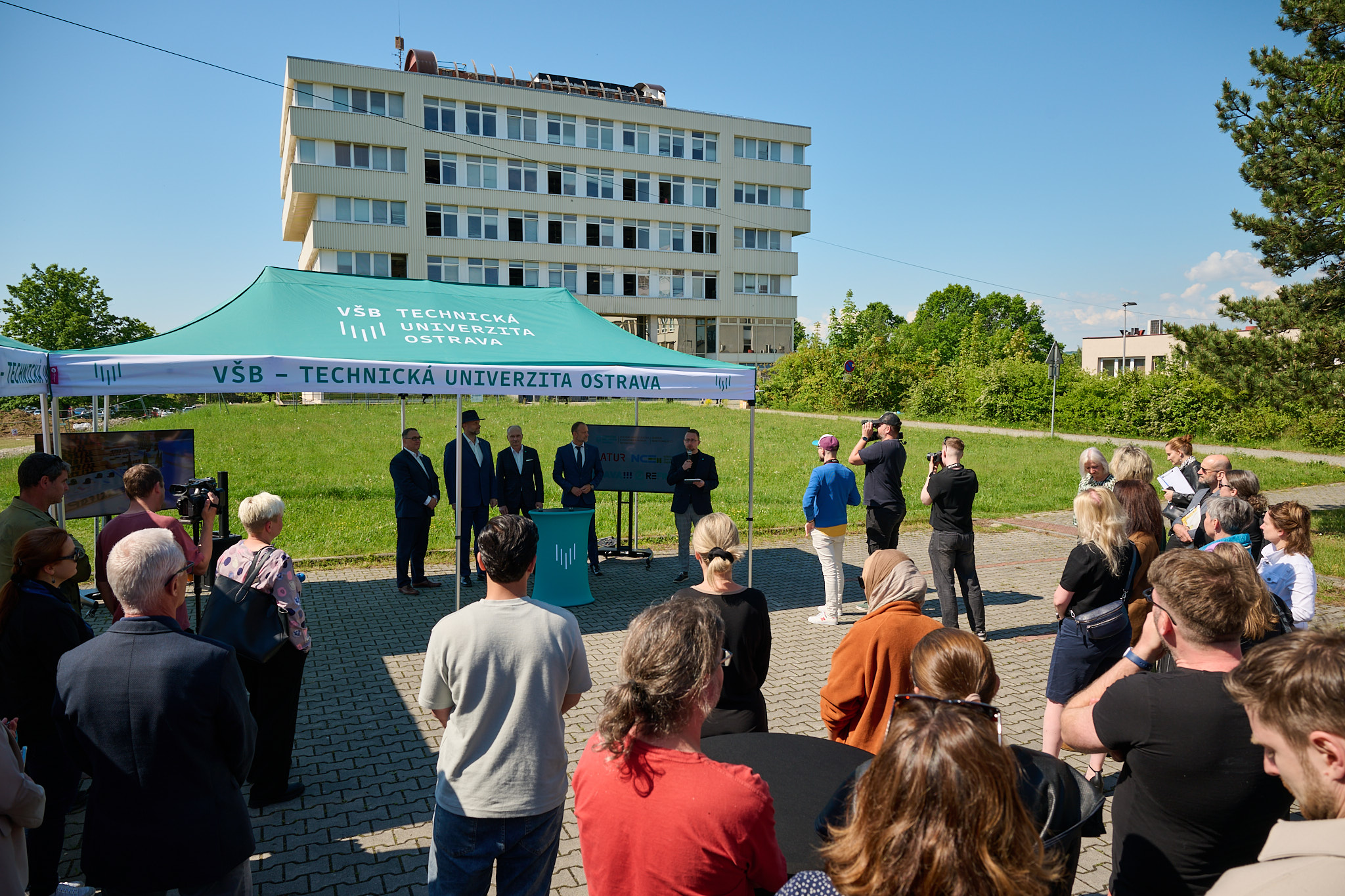
„CEETe II represents another step in developing modern research facilities that meet the needs of a modern and resilient society by bringing together excellent materials research, sustainable energy and environmental technologies. Thanks to the new infrastructure, we will be able to significantly expand our cooperation with industrial partners and international institutions and top conditions for research teams led by experienced professionals and supported by young scientists,” said Stanislav Mišák, Director of CEET VSB-TUO.
The building will primarily house research teams from CEET, the Faculty of Materials Science and Technology, the Faculty of Electrical Engineering and Computer Science, and the Faculty of Mechanical Engineering. The modernised laboratories will create an interconnected infrastructure focused on the research of advanced materials, nanomaterials and nanocomposites, with applications primarily in energy and environmental technologies. The project is also closely linked to the newly developed CEETe polygon, which focuses on testing modern energy technologies.
„The Moravian-Silesian Region has long supported projects that are moving the region towards modern technologies, innovation and sustainable industry. CEETe II is an example of an investment that connects science, education and the needs of the region’s industrial transformation,” said Josef Bělica, Governor of the Moravian-Silesian Region.
The infrastructure will include laboratories focused, for example, on the research and development of new methods for storing electrical and thermal energy, the development of hydrogen technologies, self-cleaning surfaces, thermal analysis of materials and 3D printing of silicates. The research will support the development of new materials for energy storage systems, with a particular focus on battery systems and the hydrogen economy, as well as modern construction and environmental applications. Cooperation with industrial companies, research organisations and universities in Czechia and abroad will also play an important role.
CEETe II will also create the conditions for participation in strategic projects such as REFRESH and MATUR, projects supported under the National Centres of Competence programme, and long-term intersectoral cooperation projects. The modernised infrastructure will strengthen the international dimension of research and expand the range of specialised services available to industrial partners and the public sector.
„Ostrava wants to be a modern metropolis built on technical education, research and high-value-added technologies. Investment in new research facilities at VSB-TUO strengthens the connection between the university, science and modern industry and confirms the direction in which the city has been heading for many years. The ability to concentrate talent, know-how and innovation will determine the strength of successful European metropolitan areas,” added Jan Dohnal, Mayor of Ostrava.
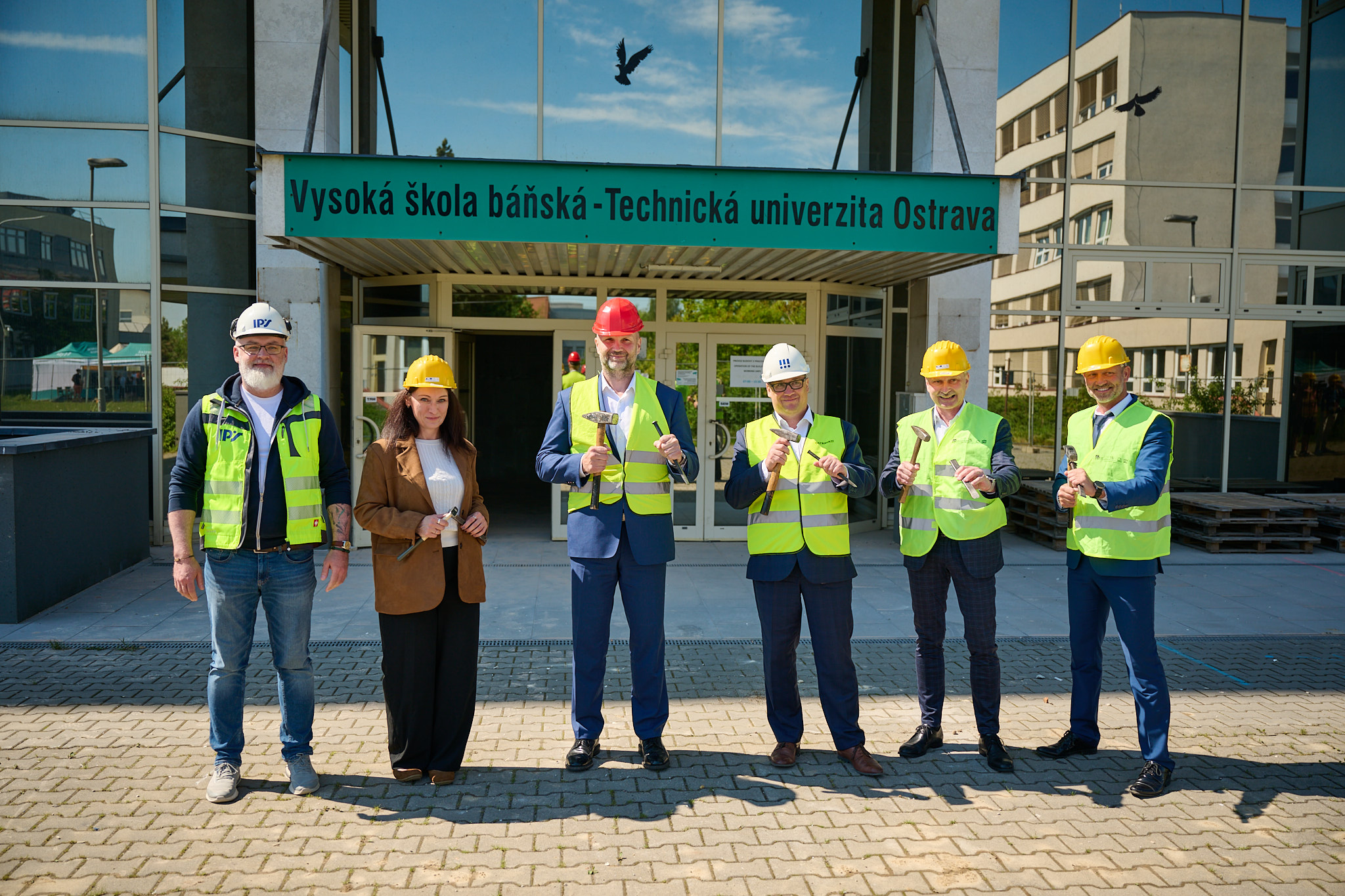
The reconstruction will also bring significant energy savings. The building will move from energy performance class C, with a value of 108 kWh/m² per year, to class A, with a projected value of −18 kWh/m² per year. The energy savings will be achieved through a new building envelope, LED lighting, energy-efficient HVAC systems and the installation of photovoltaic panels. These will be placed on the eastern, southern and western facades of the building.
A total of 489 photovoltaic panels with a combined capacity of 130 kWp will be installed. The electricity generated will be used directly in the building, while any surplus will be supplied to other buildings on the university campus.
The project also envisages the future use of rainwater for toilet flushing. Utility water distribution systems will already be installed in the building to allow connection to the planned rainwater treatment facility. Both the project documentation and the construction itself are being carried out using the BIM methodology. This will create a detailed 3D model of the building, which will be supplemented with actual operational data during construction and subsequently used for the management and operation of the building as part of facility management.
The construction work is being carried out by IPS Třinec, a.s., based on project documentation prepared by TECHNICO Opava s.r.o. The total cost of the construction work amounts to almost CZK 328 million excluding VAT. The project is co-financed by the Technologies and Applications for Competitiveness 2021–2027 programme of the Ministry of Industry and Trade, which has provided a grant of more than CZK 151 million. The reconstruction is scheduled for completion in June 2027.
CEETe II in figures:
- Number of floors: 7 + technical eighth floor; building footprint: 1,130 m²; total building volume: 27,951 m³
- Total renovated, expanded and newly constructed usable floor area: 4,940.36 m²
- Number of photovoltaic panels: 489; total PV capacity: 130 kWp
- Construction cost: CZK 327,878,215.56 excluding VAT
- Grant: CZK 151,383,786.67; grant provider: Ministry of Industry and Trade; funding programme: Technologies and Applications for Competitiveness 2021–2027; call: Infrastructure Services – ITI – Call I
- Implementation period: 450 days; construction site handover: 23 March 2026; completion date: 16 June 2027
- Project designer: TECHNICO Opava s.r.o.; construction contractor: IPS Třinec, a.s.
